

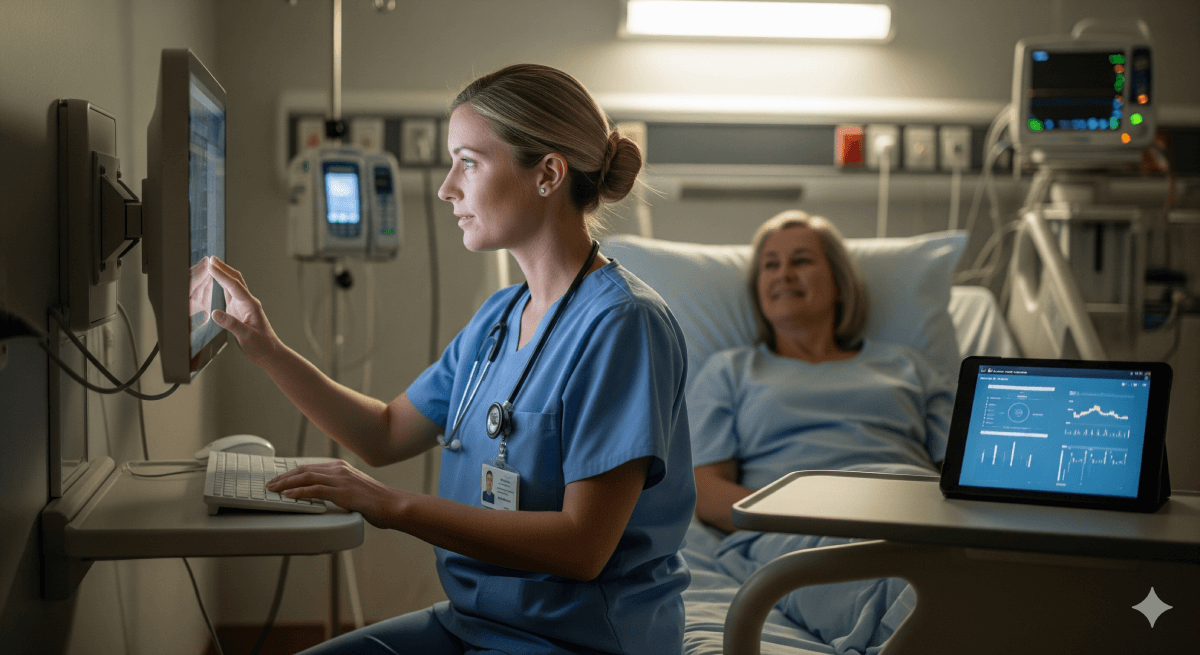
The Future of Nursing: How Technology Is Shaping Patient Care
Nursing has always been at the center of healthcare, but the role of nurses is rapidly evolving as technology transforms how care is delivered. Far from replacing human touch, innovation is enhancing the nursing profession by giving caregivers better tools to improve outcomes, streamline workflows, and connect more deeply with patients. The future of nursing is one where compassion and technology work hand in hand.
Telehealth: Breaking Barriers to Access
Telehealth is one of the most impactful advances in modern healthcare. For patients living in rural areas or those with limited mobility, virtual appointments eliminate the need for long travel and reduce delays in receiving care. Nurses play a vital role in these visits, guiding patients through technology, assessing needs, and ensuring that each individual feels heard and understood, even through a screen.
By expanding accessibility, telehealth doesn’t just improve patient convenience; it empowers nurses to reach more people, extend health education, and deliver timely support that prevents conditions from worsening.
Wearables and Remote Monitoring
From heart monitors to smartwatches that track blood pressure, wearable technology is revolutionizing patient care. Nurses now have access to real-time data that provides deeper insight into a patient’s condition outside the clinic. This continuous stream of information helps identify red flags early, allowing interventions before problems escalate.
For chronic illness management, remote monitoring has been life-changing. Patients gain confidence in managing their health, while nurses can personalize care plans based on accurate, ongoing data. The result is a more proactive, patient-centered approach to healthcare.
Electronic Health Records: Streamlining Care
Electronic health records (EHRs) have become the backbone of modern nursing. They reduce paperwork, centralize information, and allow for quicker communication between care teams. Nurses no longer need to sift through piles of charts; instead, they can access complete patient histories with a few clicks.
This efficiency means less time on documentation and more time focusing on what matters most, direct patient care. While learning new systems can feel challenging, the long-term benefits of improved accuracy and collaboration are undeniable.
Artificial Intelligence and Predictive Tools
Artificial intelligence (AI) is making its way into nursing practice, particularly through predictive analytics. These tools can identify patterns in patient data that signal risk factors for infections, falls, or complications. Nurses can act earlier, preventing issues before they arise.
Importantly, AI is not replacing clinical judgment; it’s enhancing it. By handling data analysis, these tools free nurses to use their expertise where it counts: providing compassionate, hands-on care.
The Human Element Remains Essential
Despite these technological breakthroughs, the essence of nursing remains unchanged. Patients still need empathy, trust, and human connection. Technology can support care, but it cannot replicate the comfort of a reassuring word or the skill of a nurse who notices subtle changes in a patient’s condition.
As the future unfolds, the nursing profession will continue to blend innovation with humanity. Technology equips nurses with powerful tools, but it is their compassion, intuition, and dedication that truly shape patient outcomes.
Have a Story to Share?
Your voice matters. If you have insights, experiences, or ideas that could inspire and support fellow nurses, we’d love to feature your story on the TradNurse Blog.